Showing posts with label beef. Show all posts

Sunday, July 17, 2011

How to Braise Beef, Lamb or Pork

What is braising?

Lamb braised in red wine and Provencal herbs.
Braising is a cooking technique in which the main ingredient is seared, or browned in fat, and then simmered in liquid on low heat in a covered pot. The best equipment to use would be a crock pot, pressure cooker or Dutch oven. LeCrueset makes a range of enameled pots and pans that are good for either the stove or the oven. They work well too.
Whether you choose to use the oven or the top of the stove, you will be pleased with the results. Braising is often used as a way to cook less expensive, tough cuts of meat. The end result is tender and flavorful. Other than great taste and economy, there are other reasons to cook this way.
After searing the meat, the remainder of the cooking time (until sauce/gravy preparation) does not require much attention. Once the heat is reduced, you can go about cooking other things, do some chores or take a break. This is also a plus when entertaining: you have more time for your guests.
Yet another plus of cooking with this method is that the meat tastes great and you also get delicious broth, sauce or gravy. It’s one pot cooking at it’s finest. There isn’t much to cleaning up and anything leftover can be reheated or frozen and reheated for later.
This method of cooking is great for tough cuts of meat but also works well with chicken, fish and/or vegetables. You can braise in a crock pot, pressure cooker, large saute pan or the most often used cooking vessel for braises, a Dutch oven.
Some popular dishes you may have heard of that use a braising technique are osso bucco, pot roast, braised veal & lamb shanks and braised cabbage. You can braise just about any meat, fish or vegetable you want and be as creative as you like with seasoning, but there are some ingredients that are better for braising and some you want to cook using other techniques like grilling or roasting.

9 Simple Steps to Great Braised Meat

  1. Season the main ingredient with salt and pepper.
  2. Heat a few tablespoons of oil and/or butter in a heavy pan or Dutch oven.
  3. Saute meat or vegetables in the pan on medium-high heat until the meat browns.
  4. Deglace the pan by pouring broth, beef stock, wine or juice and scrape any pieces of meat that are stuck to the pan and stir.
  5. Add cooking liquid (water, stock, wine, juice or some combination) to the half-way point of the main ingredient.
  6. Cover and place the meat on the middle of a rack in an oven that has been pre-heated to 350 degrees Fahrenheit.
  7. Cook until completely tender. This can range from 1 hour to 6 hours, depending on what you are cooking.
  8. Remove the pan from the oven and strain the meat and vegetables out of the liquid.
  9. Remove the excess fat floating in the liquid, and then reduce the sauce to desired thickness by cooking it down over low heat until it thickens. Or, make gravy by adding a mix of equal parts fat and flour (a roux).

    Wednesday, February 2, 2011

    Asparagus and Beef over Fettuccine

    There is an old Roman adage that says the more you spend, the worse you eat, and I believe it wholeheartedly. The most delicious, hearty, soul-satisfying meals can be made with a few simple, humble ingredients. Italians call it cucina povera, and it's the type of food you might find in farmhouses and tiny trattorias rather than in touristy restaurants.

    It employs simple cooking methods, seasonal ingredients and a small range of ingredients at a time so that even the most novice cook can turn out delicious results. This recipe is in the spirit of cucina povera - four ingredients, a pot and a pan, that's all you'll need.

    The first ingredient, and the star in my opinion, is asparagus. Bring a pot of salted water to a boil. After snapping the woody ends off the asparagus, cut them into two inch sections and blanch them in the water for two minutes. Time it. Then immediately remove them with a slotted spoon (reserve the water in the pot) and rinse in cold water. This stops the cooking process and locks in the green color.

    The next ingredient is the pasta. Bring the water in the pot back to a rolling boil and add your pasta. In the spirit of cucuna povera it should be whatever you have on hand, fettuccine in my case.

    The next note in this chord is the beef. I used a steak, top sirloin if memory serves, because I got it on the cheap from the grocer. Any cut will work, however. Lightly salt and pepper the steak on both sides then sear over high heat in a large saute pan with a bit of olive oil, a few minutes on each side or until a lovely deep golden brown color. Remove the steak from the heat and let cool slightly before cutting into strips.

    Turn the pan to medium, and it's time to bring it all together. Drop the asparagus into the pan along with the last ingredient, the zest and juice from one lemon. I added a bit of chopped garlic at this point, as well - an optional seasoning in this dish, more than an ingredient in its own right. Let it heat through, then add the steak back in. By now the pasta should be just shy of al dente; strain and add to the pan as well. Stir and let the pasta finish cooking for a few minutes, then plate and serve.

    There it is, four simple, fresh ingredients combine to create a delicious and satisfying meal. Enjoy!

    Sunday, January 3, 2010

    Beef and Vegetable Soup

    After an hour of searching for a way to cook up the second half of the chuck roast from last night's Braised Beef with Lentils, I came across a recipe for a lentil sausage soup from one of my favorite high-class cooking mavens, Ina Garten. Recipes aren't instructions for me, as I rarely follow what they say. Instead I use them as inspiration. I scan the ingredients, check the cooking technique and then put the recipe away. In this way I can modify it to my own personal tastes and the ingredients I have on hand. Also, not using specific amounts also means I can cook for less than a gaggle and not have to do any math!


    The main difference between Ina's recipe and my own is the protein. Since she used a precooked sausage she could just toss it in at the end and let it come to temperature just before serving. My chuck roast, however, needs to cook long and slow. So, I cut it into inch-sized cubes (not sure of the weight as it was leftover, but I got about twenty cubes or so) and browned it in a bit of olive oil, then into a crock pot it went.


    Also in the crock went a roughly chopped mirepoix (for me, it worked out to be three small celery stalks, three small carrots and half a small onion), two roma tomatoes chopped about the same size, a tablespoon of my go-to mixture herbes de Provence, a small can of reduced-sodium chicken stock, and a teaspoon or so of crushed pepper. I find it best to not add salt at this point; even reduced sodium stock imparts a salty flavor, and it's easier to add salt to take it out.


    Last comes the final ingredient. In the pan that the beef was browned in, I added a half cup of whatever random white wine I had in the fridge and a few cloves of minced garlic and let it deglaze and reduce, then poured that into the crock as well. Add water to cover the mixture and set on low.


    Five or six hours later when the meat is fork tender and your house smells like heaven, turn the crock to high, add a quarter cup of lentils and continue cooking till soft, about twenty minutes. I had originally planned on eating this as a stew, but the blender was calling my name. Carefully remove all of the pieces of meat and blend the mixture in batches until smooth. Place meat back into the soup. Garnish with a little creme fraiche and parsley.


    The soup was so delicious I completely forgot to photograph it prior to eating. Oh well, there's plenty left for lunch tomorrow.

    Braised Chuck Roast with Lentils


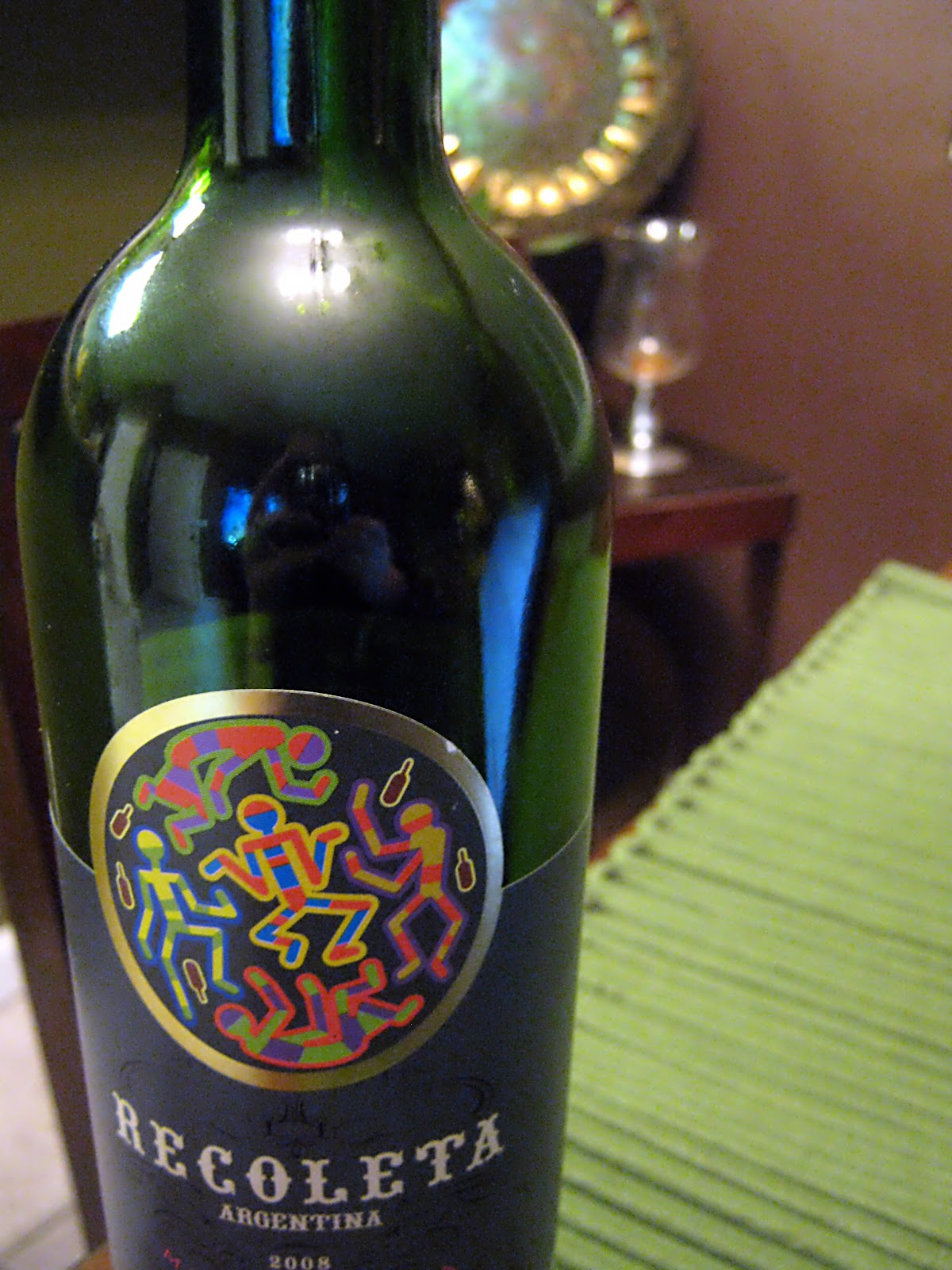
    A few weeks ago I bought a four dollar bottle of wine that changed my life. Dark, dry and full of tannins, it was a wine that worked perfectly for me - a wine strong enough to compete with lamb and beef, but drinkable enough to enjoy on its own.


    Recoleta is a Malbec/Bonarda blend. The bottle describes it as "a full-bodied smooth red, full of blackberry and raspberry flavors with a hint of spice." I call it amazing. The first time I took a sip, I was convinced: this is not just a great red for drinking. No, this wine aspires to more. This wine was born to braise.


    And so, after a long arduous day of shopping I was in the mood for some braised lamb. Turns out Fresh & Easy was all out of my preferred quadruped, so I reached for a beef chuck roast, mainly because it was the cheapest cut they had. Actually, including the bottle of wine, it cost me a grand total of $17.34 for the ingredients, of which I only used half. We'll see what I come up with for the rest tomorrow.


    Anyway, on to the beef. Braising is a simple process. Brown the roast on both sides in a very hot pan with a little olive oil. I placed halved roma tomatoes cut side down in the pan when I turned the beef over and let them cook a bit as well. The tomatoes add a great acidity to the dish and are served along side the beef. If you have an aversion to tomatoes, please stop reading and immediately seek therapy. Then, try substituting a bit of balsamic vinegar for the tomatoes.


    When the meat is browned remove it from the pan and set aside. I added a half a red onion, sliced, and a couple cloves of minced garlic. Cook until the onions are soft, just short of caramelized. Place the beef and the tomatoes back into the pan and pour in the wine till it comes about halfway up the side of the beef. Any higher than that and this would be called 'Stewed Chuck Roast with Lentils.'


    Speaking of lentils, now is a good time to get those started. Lentils are traditional Italian fare for the new year so I thought it was fitting. The cooking process is even simpler than the braising: just add two cups of water to one cup of lentils and cook until the liquid has been absorbed. At the end the lentils will pop open and soften. Resist the tempation to add salt while cooking, as it makes the lentils tough. You can season after.


    After about fifteen minutes of braising the beef should be done. Remove it and the tomatoes and set aside. Strain the braising liquid to remove any onions and garlic, then turn the heat up to high and reduce the liquid to a sauce. Assemble thusly: roast, tomatoes and lentils go on the plate first, some of the neat purple onions over the lot, then the amazing wine sauce on top. It tastes more difficult to make than it is.


    And of course, try the Recoleta, it's the best four bucks you'll ever spend.
    Related Posts Plugin for WordPress, Blogger...